RAG Without the Hype: When Grounding Improves AI and When It Does Not
RAG explained honestly: what Retrieval-Augmented Generation fixes, what it breaks, and how to evaluate it.
TL;DR: Retrieval-Augmented Generation (RAG) connects a language model to a controlled body of documents, which can improve freshness, traceability, and domain relevance, but it does not guarantee the retrieved evidence is correct or that the model uses it faithfully. RAG shifts some failure modes (stale training data, generic answers) and introduces new ones (bad chunking, wrong permissions, citation mismatch, prompt injection via retrieved content). Treat RAG as a system to be evaluated end-to-end, not a switch that turns a language model into a database query.
Key takeaways:
- RAG improves relevance and traceability for bounded, well-maintained knowledge bases; it does not remove the need for the model to reason well.
- Retrieval failures (poor chunking, weak metadata, wrong document version) are as damaging as generation failures, and often harder to notice.
- A citation pointing to a real document does not guarantee that document actually supports the generated sentence; faithfulness must be tested separately.
- Retrieved content can carry prompt-injection payloads, a risk formally catalogued by OWASP's Top 10 for LLM Applications.
- Before building a RAG system, sample real user questions and check manually whether experts agree on the correct answer: if they don't, retrieval technology won't resolve the ambiguity.
What does RAG actually change compared to a plain language model?
A RAG system retrieves documents or data relevant to a question and supplies them to a model as additional context before it generates an answer. This can meaningfully improve freshness (the model can see this week's policy, not last year's training snapshot), domain relevance, traceability back to a source, and access control by scoping retrieval to permitted content.
It is well suited to internal policy lookup, product knowledge bases, customer service grounding, and structured research support. The original RAG architecture, introduced by Lewis et al. (2020) at Facebook AI Research, was explicitly designed to combine parametric knowledge inside a model with non-parametric retrieval from an external corpus, and that combination is still the right mental model today.
What RAG does not change is the fundamental nature of generation: the model still writes the answer, and retrieval only narrows the evidence environment it draws on. It does not convert a generative model into a deterministic database query, and treating it that way leads teams to under-test the generation step.
Why do RAG systems still hallucinate or give wrong answers?
Failures cluster in a handful of predictable places. Poor chunking can split a document in a way that strips out the context needed to interpret a clause correctly. Weak metadata can cause the system to retrieve the wrong jurisdiction, the wrong product version, or an outdated policy that was never formally retired.
Access-control mistakes can expose restricted or confidential content to users who should never see it: a data-governance failure disguised as a retrieval bug. Separately, the model itself may ignore the retrieved evidence entirely, blend conflicting passages into an incoherent answer, or generate a claim that goes beyond anything the source actually supports.
"A citation can point to a completely real document while the sentence it's attached to says something that document never claimed," notes Roger Basler de Roca. "Faithfulness has to be tested as its own metric: it doesn't follow automatically from correct retrieval."
There is also a security dimension: content hidden inside a retrieved document (invisible text, embedded instructions) can attempt to redirect the assistant's behaviour, a technique documented in the OWASP Top 10 for LLM and Generative AI Security.
How should teams evaluate a RAG system before trusting it?
Evaluation has to cover the whole chain, not just the final answer. That means testing retrieval recall (does the right document even get pulled), ranking quality (is it near the top), answer faithfulness (does the generated text actually reflect the source), citation correctness, refusal quality on unanswerable questions, latency, and access enforcement.
| Test category | What it catches |
|---|---|
| Retrieval recall | Right document missing from results |
| Ranking | Right document buried below irrelevant ones |
| Faithfulness | Answer contradicts or exceeds its cited source |
| Citation correctness | Citation attached to the wrong passage |
| Refusal quality | System guesses instead of saying "I don't know" |
| Access enforcement | Restricted content surfaced to the wrong user |
A representative evaluation set should be built from real questions people actually ask, deliberately including ambiguous, adversarial, outdated, and genuinely unanswerable cases. According to guidance from NIST's Generative AI Profile, evaluation of generative systems should explicitly account for content provenance and the traceability of outputs back to source material, which is exactly the discipline RAG evaluation requires.
In production, the interface should show users the supporting passage and its date, distinguish authoritative sources from informal material, and route content ownership and expiry through named owners rather than letting documents go stale silently.
When is RAG the right architecture, and when is it a distraction?
RAG is a sound choice when users repeatedly ask questions about a bounded, actively maintained body of knowledge and need to see the evidence behind an answer: think internal policy assistants, product documentation search, or regulatory Q&A grounded in a specific corpus.
It is a poor first choice when the source documents themselves conflict, when no one owns keeping them current, or when success cannot be meaningfully measured because the "correct" answer is a matter of contested judgment rather than documented fact.
Before committing engineering time, sample a realistic set of user questions and have subject-matter experts manually check the source material. If experienced reviewers cannot agree which passage actually answers a question, no amount of retrieval sophistication will manufacture that agreement: the ambiguity lives in the content, not the architecture.
A short pre-build checklist
- Source documents have a named owner and a defined update/expiry process
- Real user questions have been sampled and manually checked against sources
- Access-control boundaries around the corpus are mapped and testable
- A faithfulness and citation-correctness metric is defined, not just retrieval accuracy
- A plan exists for handling unanswerable or genuinely ambiguous questions
What's next for grounded AI systems?
As agentic systems increasingly chain retrieval with actions (booking, filing, updating records) the security surface of RAG expands beyond wrong answers into wrong actions triggered by manipulated retrieved content. Expect evaluation standards and security guidance from bodies like OWASP and NIST to keep evolving alongside these agentic patterns.
The organisations getting the most durable value from RAG are treating it as a data-governance project with a language model attached, not a language-model project with a database bolted on. If your team is scoping a RAG or agentic AI initiative and wants a candid external view, Roger Basler de Roca is available for keynotes and advisory workshops.
FAQ
Does RAG eliminate hallucinations?
No. RAG reduces one category of hallucination (answers based on outdated or missing training knowledge) but introduces new failure modes such as retrieving the wrong document or generating text that goes beyond what the retrieved source actually supports. Faithfulness must still be tested explicitly; it is not guaranteed by retrieval alone.
How is RAG different from fine-tuning a model?
Fine-tuning changes a model's internal parameters using training examples, embedding knowledge implicitly and permanently until retrained. RAG instead supplies external documents as context at query time, which makes updates faster (edit the document, not the model) and answers more traceable, but keeps the underlying reasoning model unchanged.
Can RAG systems be manipulated by attackers?
Yes. Content hidden inside retrieved documents (including invisible or embedded instructions) can attempt prompt injection, a risk formally catalogued by OWASP's LLM security guidance. Any RAG system that also takes actions (not just answers questions) needs security review of its retrieval pipeline, not just its language model.
What's the single most common cause of RAG failure in practice?
Poor document hygiene: outdated, duplicate, or conflicting source material with no clear owner. Retrieval technology cannot resolve ambiguity that already exists in the underlying corpus: it will just retrieve that ambiguity faithfully and hand it to the model.
Is RAG worth building for a small, informal knowledge base?
Usually not as a first step. RAG earns its complexity when questions are repeated at volume, the knowledge base is large enough that manual search is slow, and evidence needs to be visible to users. For small or informal document sets, simpler search or a curated FAQ often delivers similar value with far less engineering and governance overhead.
Related articles
- Agentic AI Explained: What Autonomous AI Agents Mean for BusinessAgentic AI explained: how autonomous AI agents plan, act, and where human oversight still matters most in 2025.
- The AI Training Is Over. Why Has Nothing Changed?Why organisations need AI coaching rather than another course, and the four-step CORE model (Connect, Orient, Reframe, Enable) for building lasting AI capability.
- The AI Adoption Number Nobody Reports: Paid ConversionMicrosoft's Copilot converts about 6.7 percent of its commercial base and OpenAI about 6.6 percent of weekly users. Why Google's 0.8 percent is not comparable, and which metric leaders should track instead.
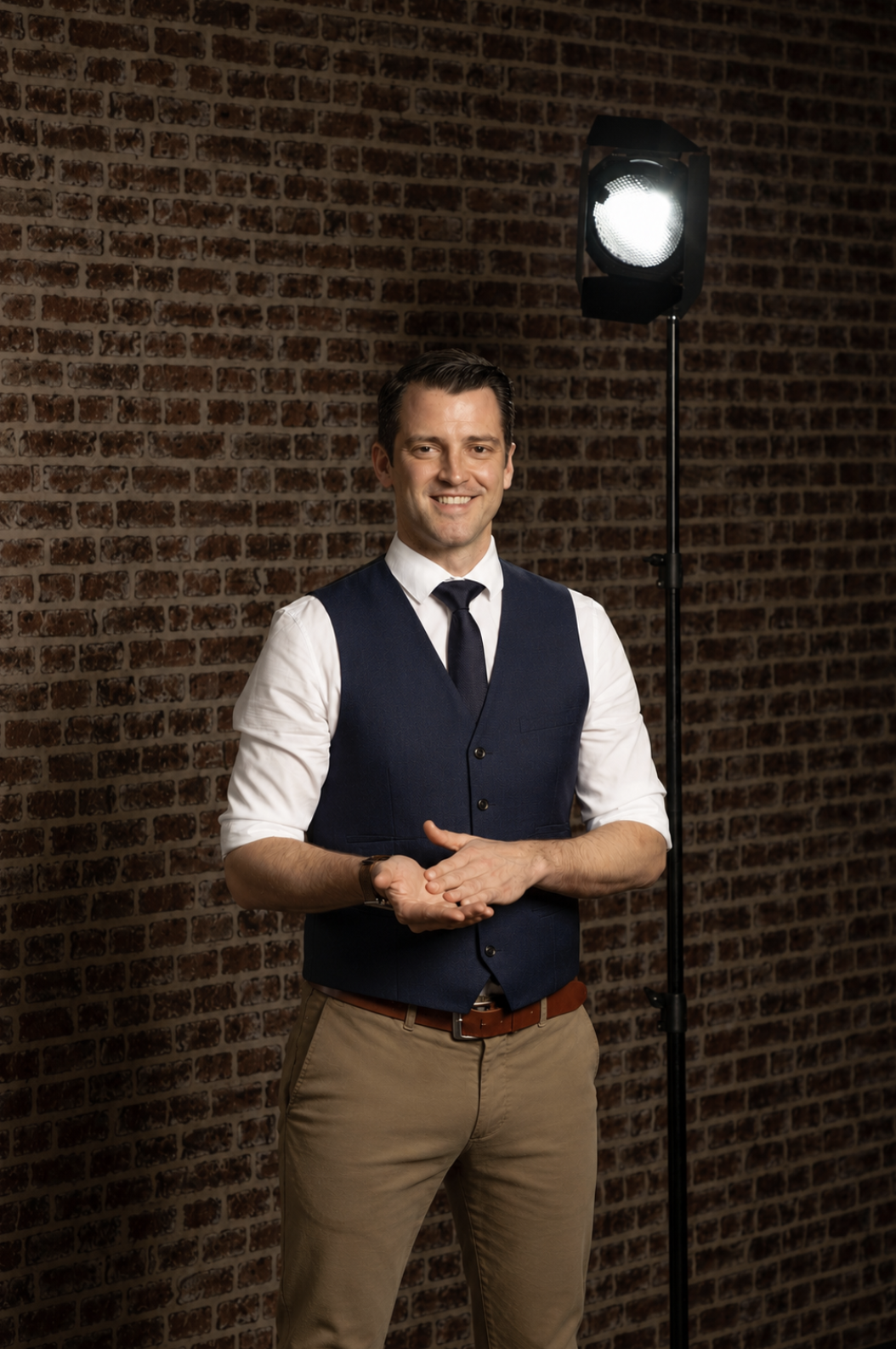
About the author: Roger Basler de Roca
Roger Basler de Roca researches cognitive offloading and delivers AI keynotes on human judgement, agents, literacy and European sovereignty. Based in Zurich, he supports 60+ companies, delivers 100+ keynotes per year in English, German, French and Spanish, and lectures at several Swiss universities of applied sciences.